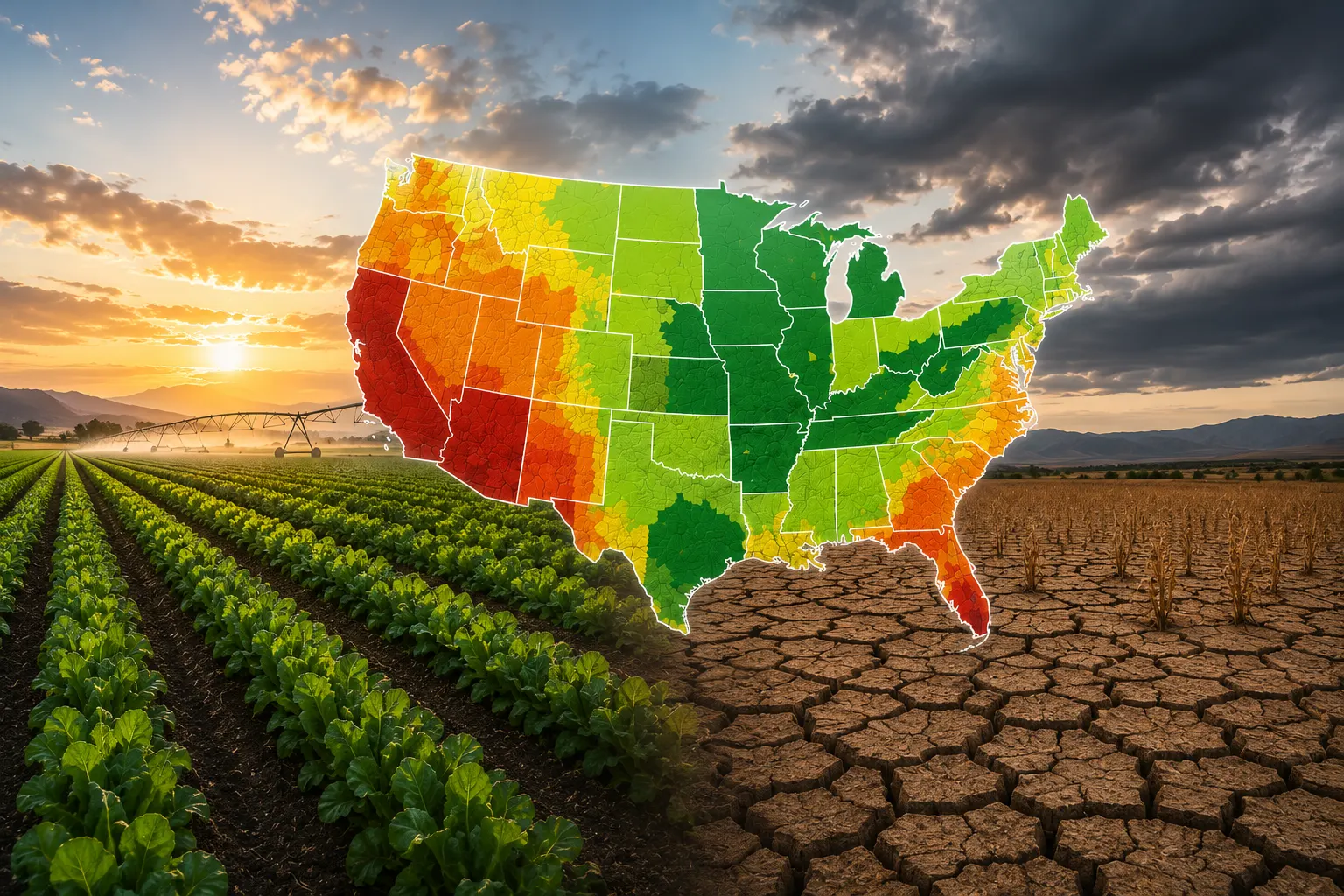
Warmer temperatures and fewer frost days are extending the growing season across much of the United States. At first glance, that may appear beneficial for agriculture. But the ability to grow food ultimately depends on more than temperature—it depends on reliable access to water.
Climate change is often discussed in terms of rising temperatures, stronger storms, and sea-level rise. One consequence receiving less attention is the continued expansion of the frost-free growing season across many parts of the country.
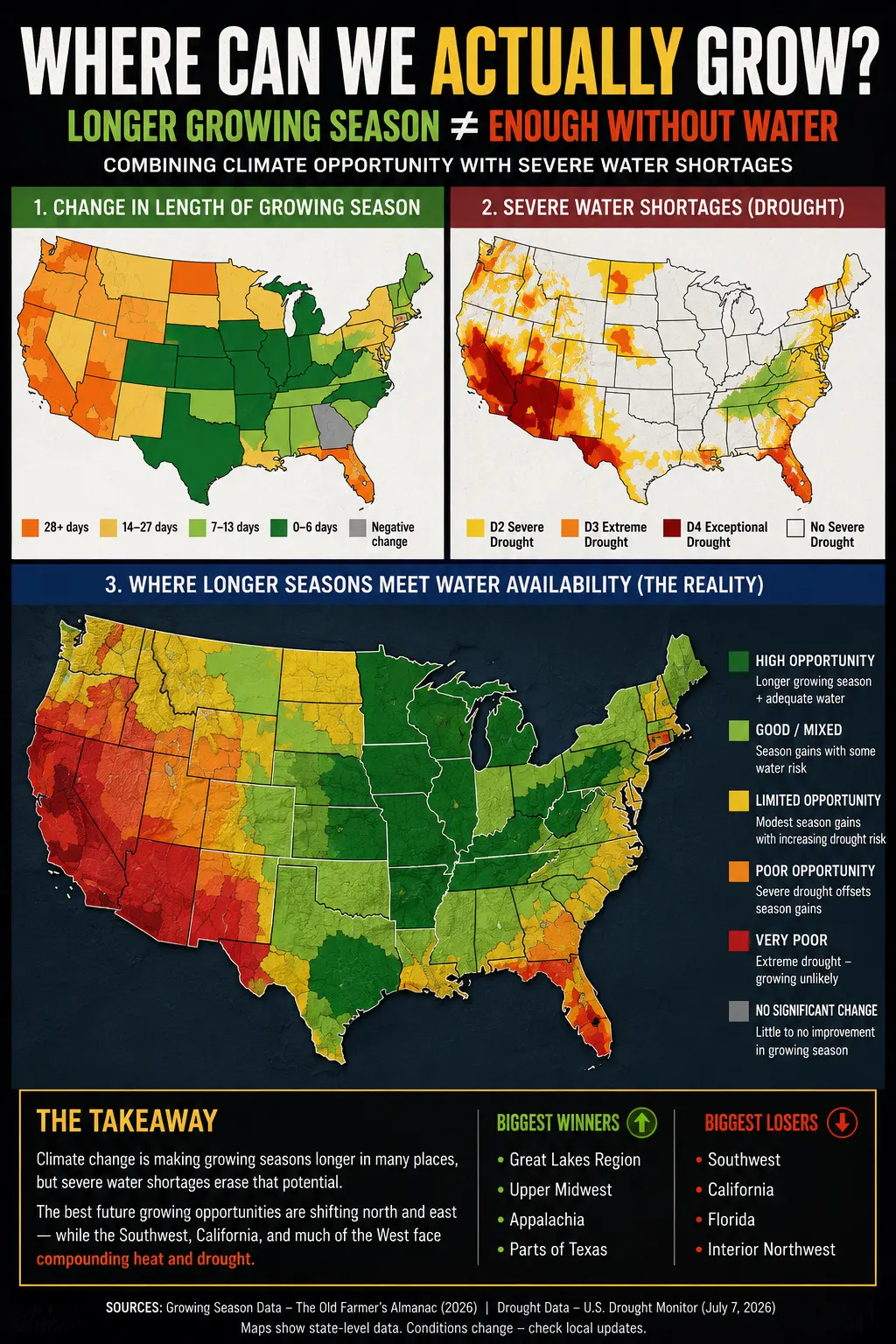
The accompanying map compares areas where growing seasons have lengthened with areas currently experiencing severe, extreme, or exceptional drought. When viewed together, the two trends reveal a more complicated agricultural outlook.
A longer growing season does not necessarily mean greater food production when water becomes the limiting resource.
A Longer Growing Season Is Only One Piece of the Equation
Additional frost-free days can provide farmers with longer planting windows, expanded crop choices, or opportunities for multiple harvests. Those advantages, however, only exist when crops receive sufficient water at the right time.
Potential Opportunity
Fewer frost days may extend planting and harvesting windows, particularly in northern and eastern regions where water supplies remain comparatively stable.
Increasing Constraint
In drought-prone regions, additional heat can increase evaporation, soil-moisture loss, irrigation demand, crop stress, and pressure on already-limited water supplies.
Plants cannot benefit from additional growing days when reservoirs decline, groundwater becomes depleted, irrigation deliveries are restricted, or precipitation arrives at the wrong point in the growing cycle.
California Demonstrates What Is at Stake
No state illustrates the relationship between agriculture and water infrastructure more clearly than California. The state is the country’s largest agricultural producer by value and supplies a substantial share of the nation’s fruits, vegetables, and nuts.
Approximate share of the total value of U.S. agricultural production.
Approximate share of U.S.-grown vegetables attributed to California.
Share of U.S. fruit and nut production commonly attributed to the state.
Agricultural commodities produced across California’s diverse growing regions.
Much of that production relies on highly coordinated irrigation networks supplied by reservoirs, mountain snowpack, surface-water systems, and groundwater basins.
When those sources become less predictable, the consequences can extend far beyond the farm. Food processors, distributors, retailers, municipalities, and consumers may all experience the effects through changing availability and higher costs.
Agriculture Is Adapting to Greater Climate Variability
Farmers and water operators are not merely adapting to gradually warmer temperatures. They are managing greater variability across entire water and energy systems.
Drought and Flood Cycles
Long dry periods may be interrupted by intense rainfall that is difficult to capture, store, and distribute.
Extreme Heat
Higher temperatures increase crop water demand, evaporation, and stress during critical growth stages.
Earlier Snowmelt
Western water systems may receive runoff earlier than agricultural demand reaches its seasonal peak.
Groundwater Pressure
Surface-water shortages can increase reliance on aquifers that may already be declining.
Power Reliability
Pumping, treatment, cooling, and distribution require dependable energy during periods of peak demand.
Planning Uncertainty
More volatile conditions complicate crop selection, planting, infrastructure planning, and capital investment.
Infrastructure Will Determine How Communities Adapt
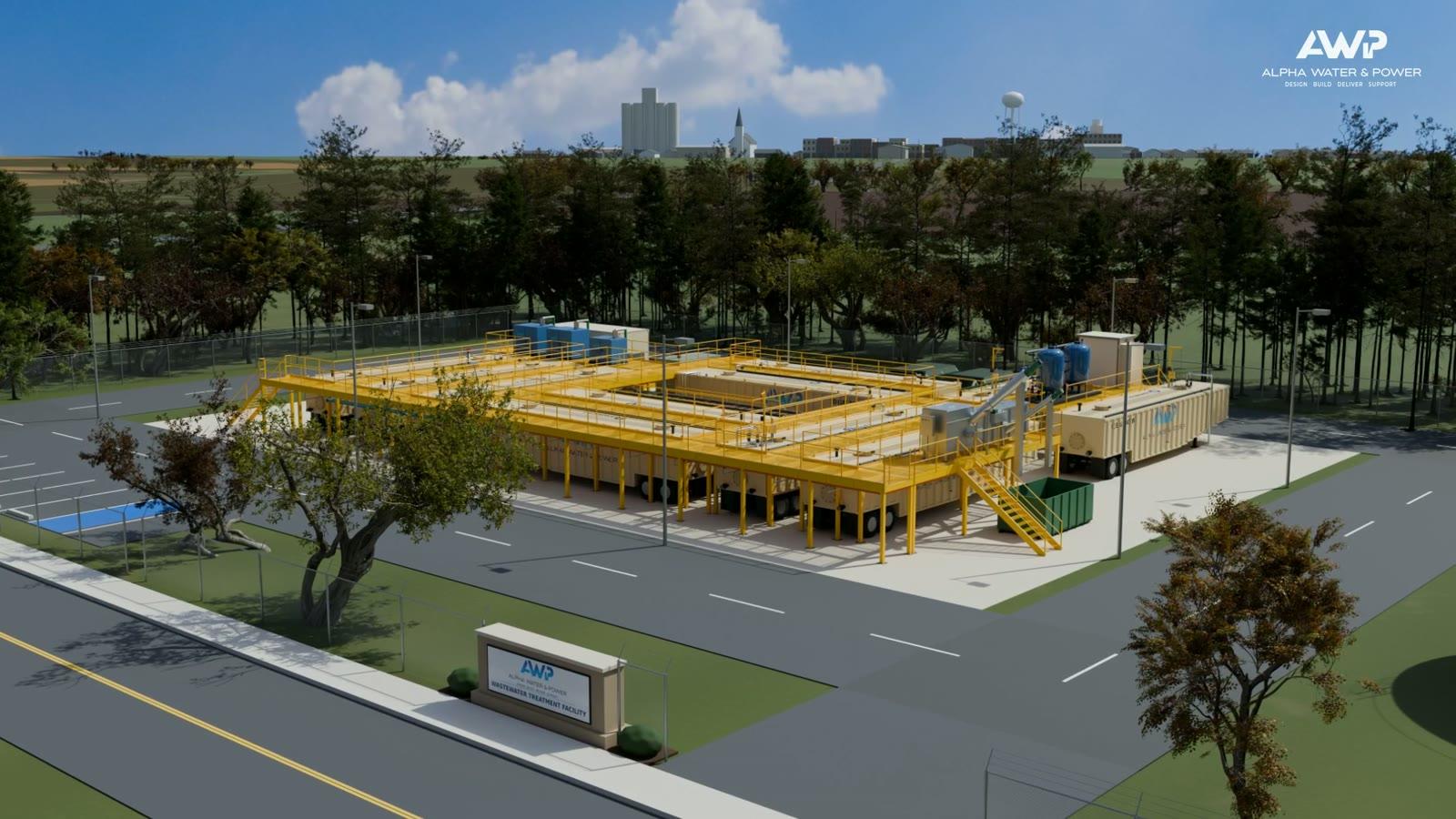
The challenge extends beyond farming. Municipalities, utilities, industrial facilities, and agricultural operations all depend on infrastructure capable of treating, storing, moving, reusing, and powering increasingly constrained water supplies.
Long-term resilience may require an integrated approach that combines water management with dependable energy systems.
- Advanced water-treatment systems
- Wastewater reclamation and reuse
- High-efficiency pumping infrastructure
- Desalination and brackish-water treatment
- Storage and water-distribution improvements
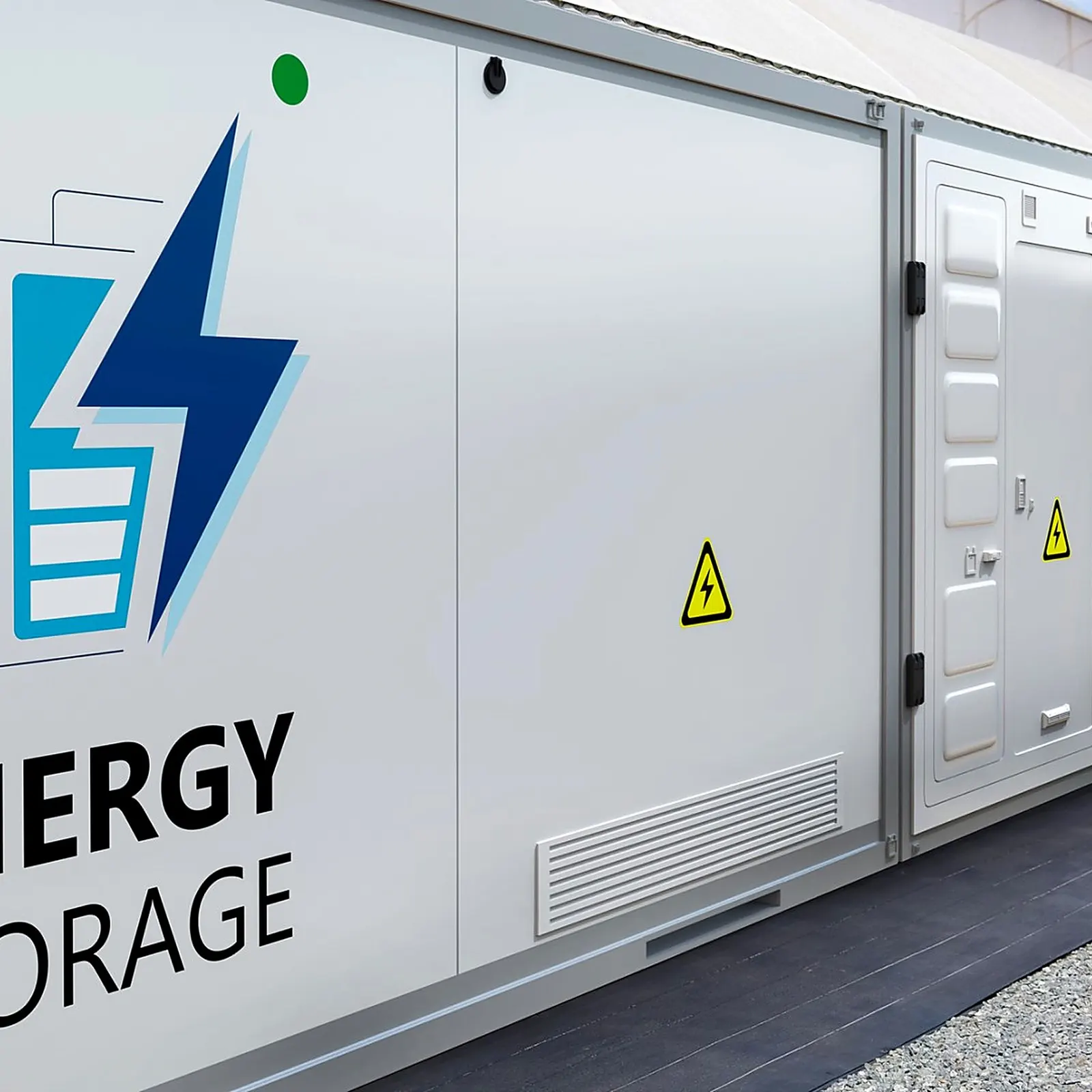
- Backup and distributed power generation
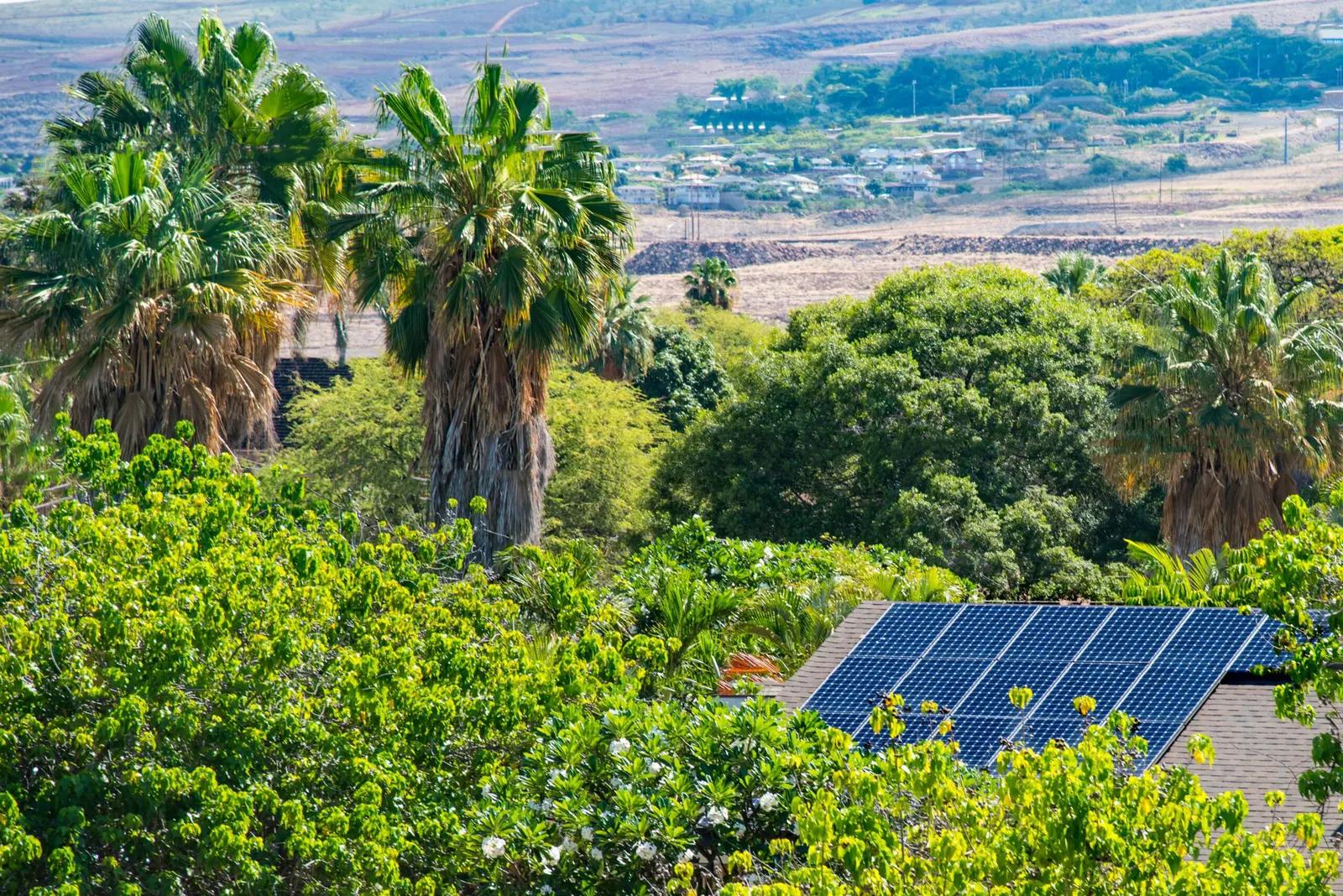
- Renewable energy and microgrids
- Monitoring, automation, and system controls
Reliable Water Requires Reliable Power
Water infrastructure and energy infrastructure are inseparable. Treatment plants need electricity. Pumps need electricity. Reuse, desalination, pressure management, and automated controls all depend on a consistent source of power.
As drought increases the need to move, treat, and recover water more efficiently, facilities may also face higher energy demand and greater exposure to grid disruptions. Resilient planning therefore requires evaluating water and power as one interconnected system rather than as separate operational concerns.
The Real Question Is Not How Long the Growing Season Lasts
The more important question is whether communities will have enough reliable water—and the infrastructure needed to manage it—to benefit from those additional growing days. Water availability, system resilience, and long-term resource planning may ultimately determine where American agriculture can thrive.
Planning for a More Water-Constrained Future?
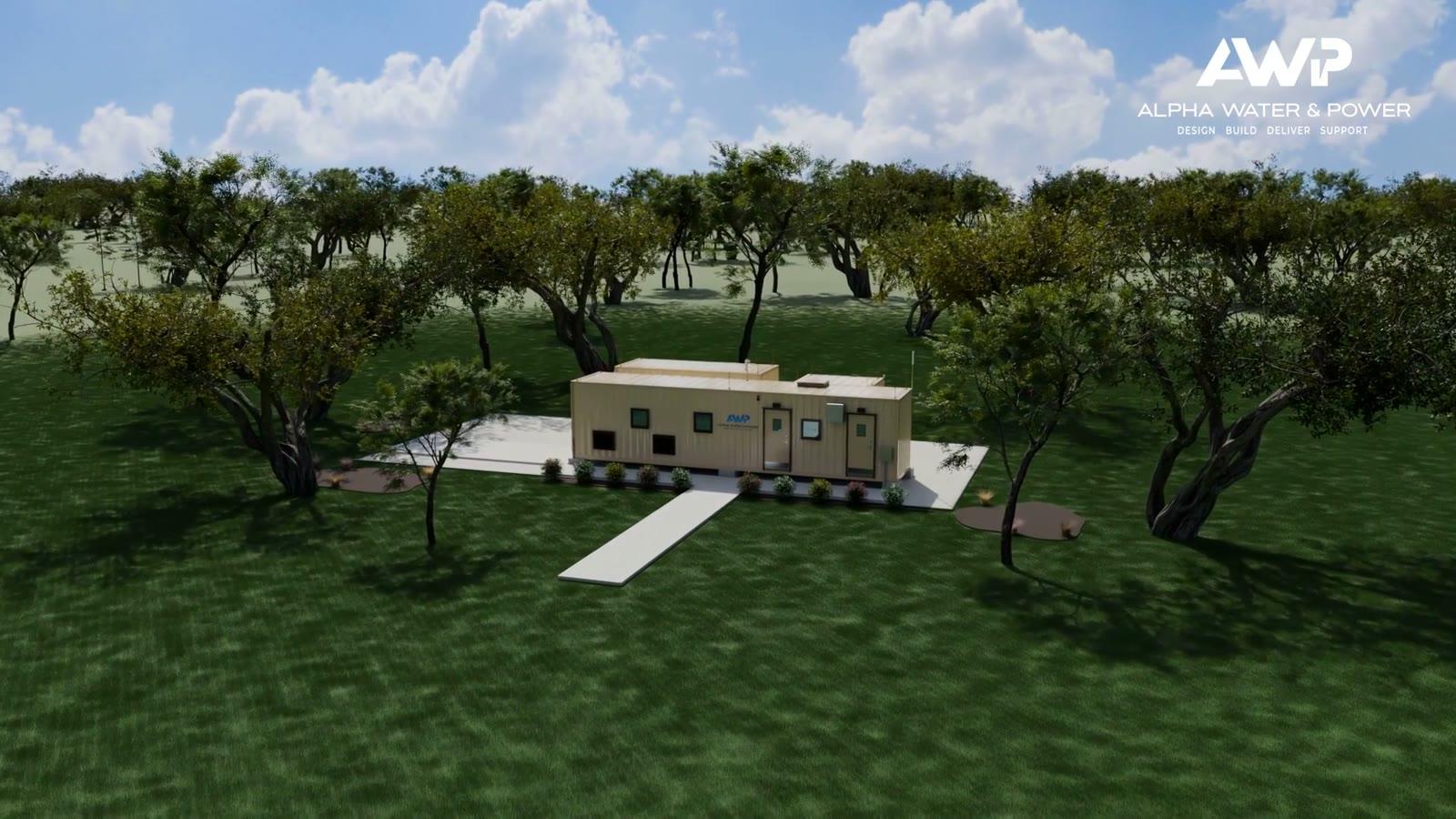
Alpha Water & Power develops integrated water, wastewater, and power solutions for municipalities, industrial operators, agricultural operations, engineers, and infrastructure partners.