
AI’s Physical Footprint: Reshaping the U.S. Energy-Water Nexus and the Rise of Data Center Microgrids
A Comprehensive Review of Resource Constraints, Infrastructure Legitimization, and the Reliability Strategies Defining the Generative AI Era.
Executive Summary & Key Takeaways
- Sustained Demand Profile: AI workloads represent continuous, high-capacity load growth that diverges from traditional utility cyclical planning models.
- Geographic Bottlenecks: Localized transmission constraints, rather than raw generation capacity, are the primary inhibitors of new facility deployment.
- The Resource Nexus: Electrical demand and water consumption for cooling are inextricably linked, creating a dual-resource constraint for regional planners.
- Architectural Shift: On-site microgrids are transitioning from backup systems to primary operational architectures to meet stringent reliability thresholds.
Data Centers as Critical Infrastructure
The rapid expansion of artificial intelligence has moved the data center from the periphery of industrial planning to its very center. Far from being neutral warehouses for hardware, these facilities are now understood as complex sociotechnical objects that exert profound influence over local ecologies and public resources.
This legitimization process involves substantial public investment in the form of tax incentives, land use approvals, and utility prioritization. As these sites grow in scale, they cease to be mere consumers of services and become defining features of the regional infrastructure landscape.
Geographic Concentration and Grid Stress
The clustering of data centers in regions like Northern Virginia, Texas, and the Midwest is a result of path dependency in fiber and power infrastructure. However, this concentration is reaching a tipping point where existing transmission lines can no longer support the influx of new hyperscale requests.
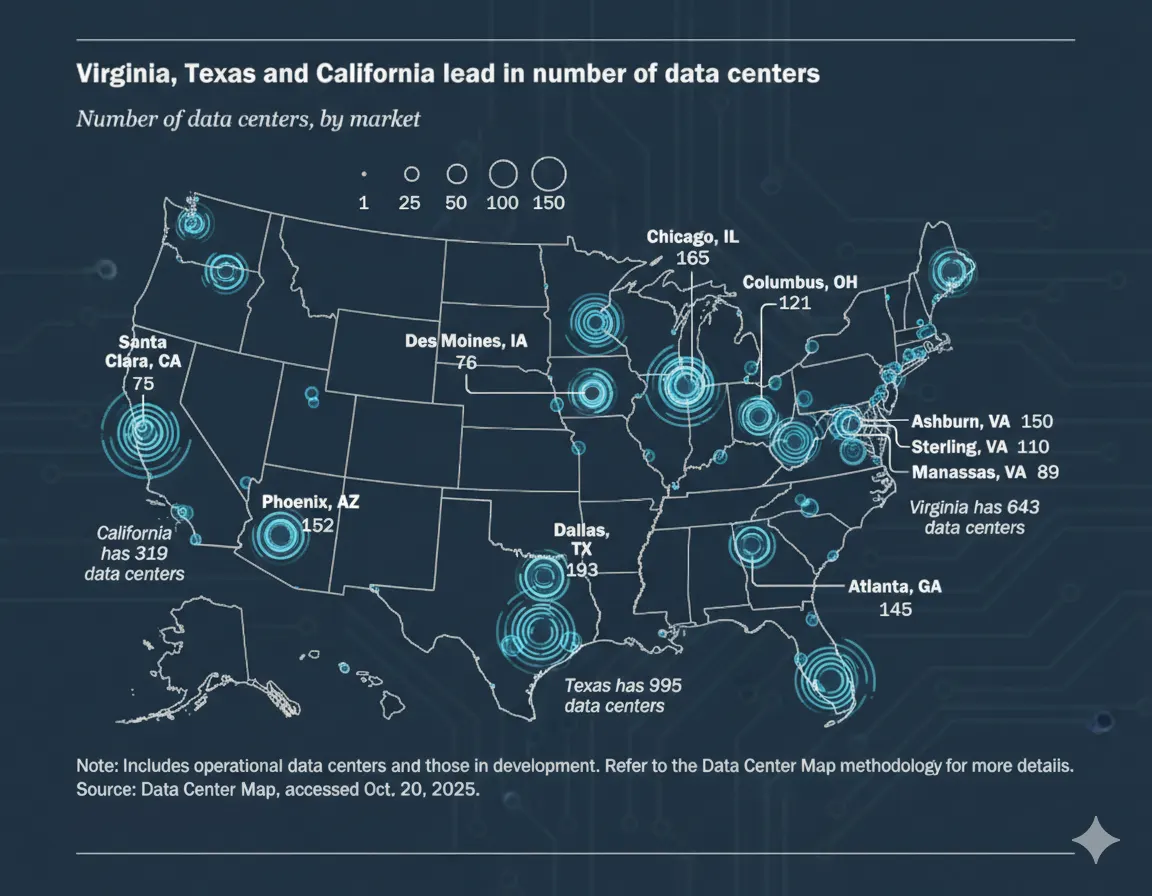
This shift indicates that simply building more power plants is insufficient. The bottleneck lies in the physical delivery of that power through congested corridors, necessitating a move toward decentralized, on-site generation.
How AI Changes the Energy Equation
Traditional capacity planning by utilities is built on the assumption of cyclical and predictable load patterns. AI workloads, specifically large-scale model training and high-concurrency inference, do not follow these patterns.
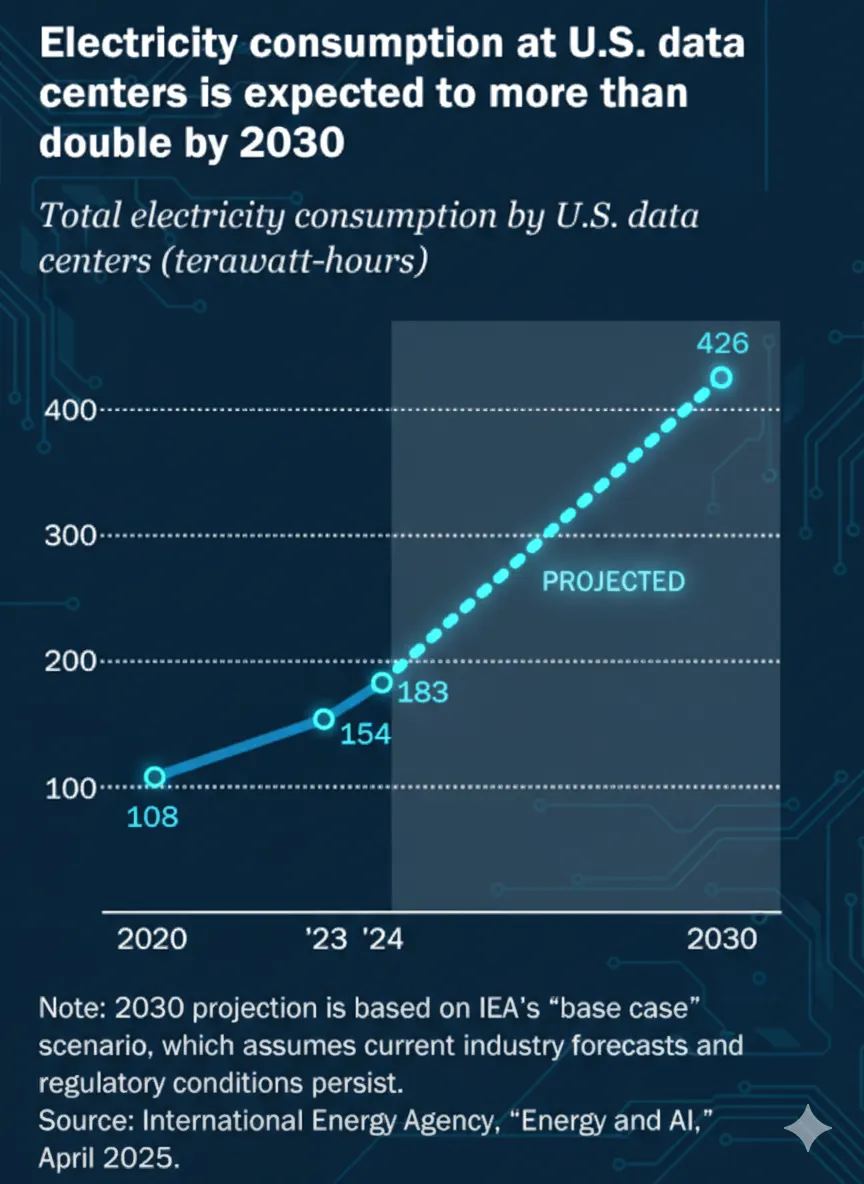
Because these loads run 24/7 at near-maximum capacity, they provide no breathing room for the grid to recover or for utilities to perform maintenance on aging infrastructure. This sustained demand is what drives the absolute increase in electricity use.
The Efficiency Paradox
There is a common industry narrative that increasing chip efficiency will eventually curb the energy appetite of AI. However, history and data suggest otherwise. As compute becomes more efficient, the scale of deployment increases even faster, leading to a net increase in total consumption.
Water: The Overlooked Constraint
While energy captures the headlines, water availability is the physical limit that often stops data center projects in their tracks. Cooling a facility requires billions of gallons of water annually, often competing directly with agricultural and residential needs.
This entanglement means that a failure in one system often triggers a failure in the other. Alpha Water & Power specializes in resolving these dual-resource constraints through integrated infrastructure planning.
Why Microgrids Are Moving from Optional to Essential
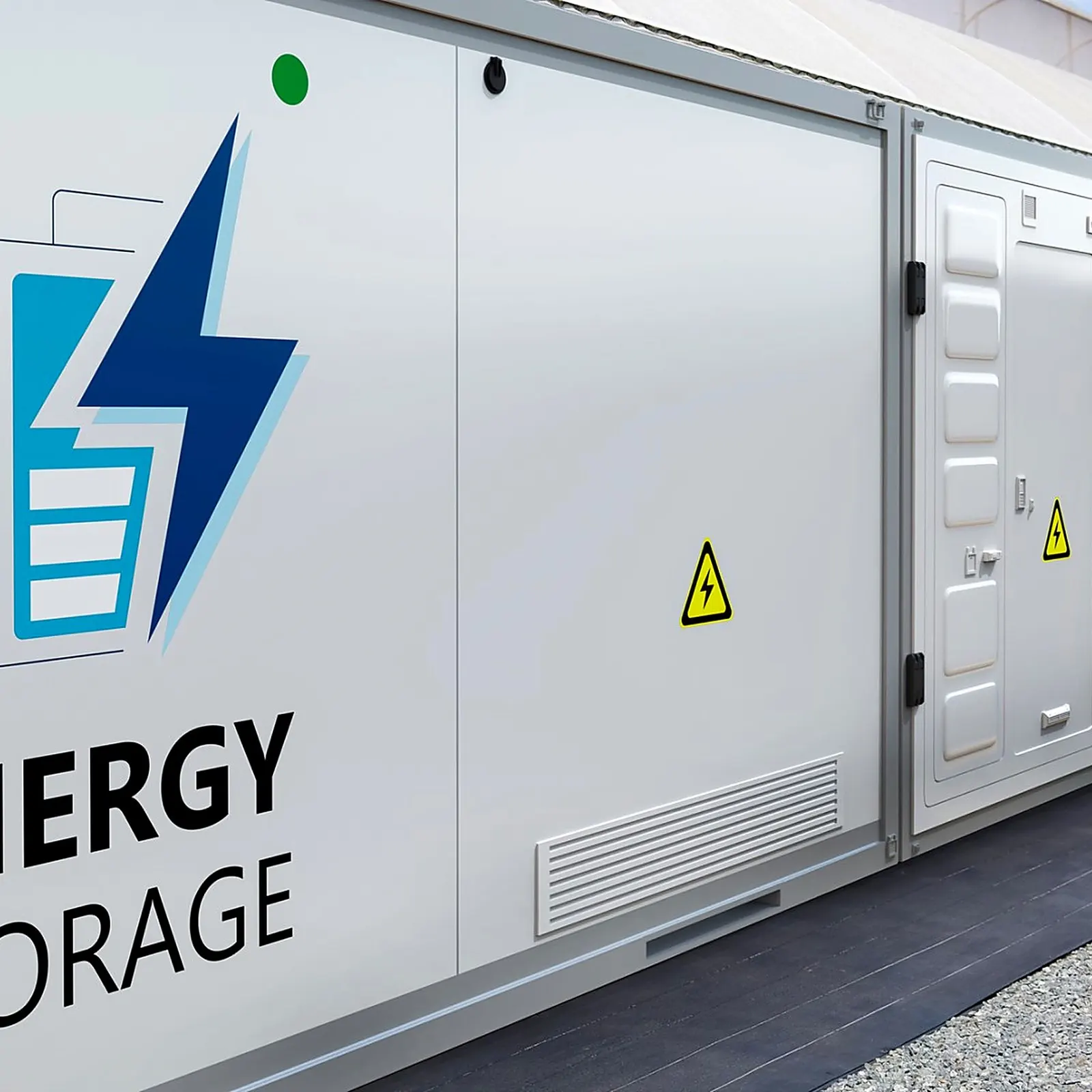
The traditional model of relying solely on the public grid is becoming a source of unacceptable operational risk for hyperscale operators. To manage this risk, the industry is pivoting toward islandable microgrids that combine on-site generation with sophisticated battery energy storage systems (BESS).
These microgrids do more than provide backup; they allow the data center to function as a shock absorber for the grid. By generating their own power during peak hours, they prevent the public utility from having to fire up expensive and dirty fossil-fuel peaker plants.
Energy Sources & Climate Tradeoffs
The environmental impact of microgrids is often debated due to the use of natural gas or diesel on-site. However, a systems-level view reveals a more complex picture. When a data center manages its own load through high-efficiency on-site turbines, it reduces the strain on a grid that might otherwise rely on less efficient coal or gas plants.
Cost Pass-Through and Consumer Impact
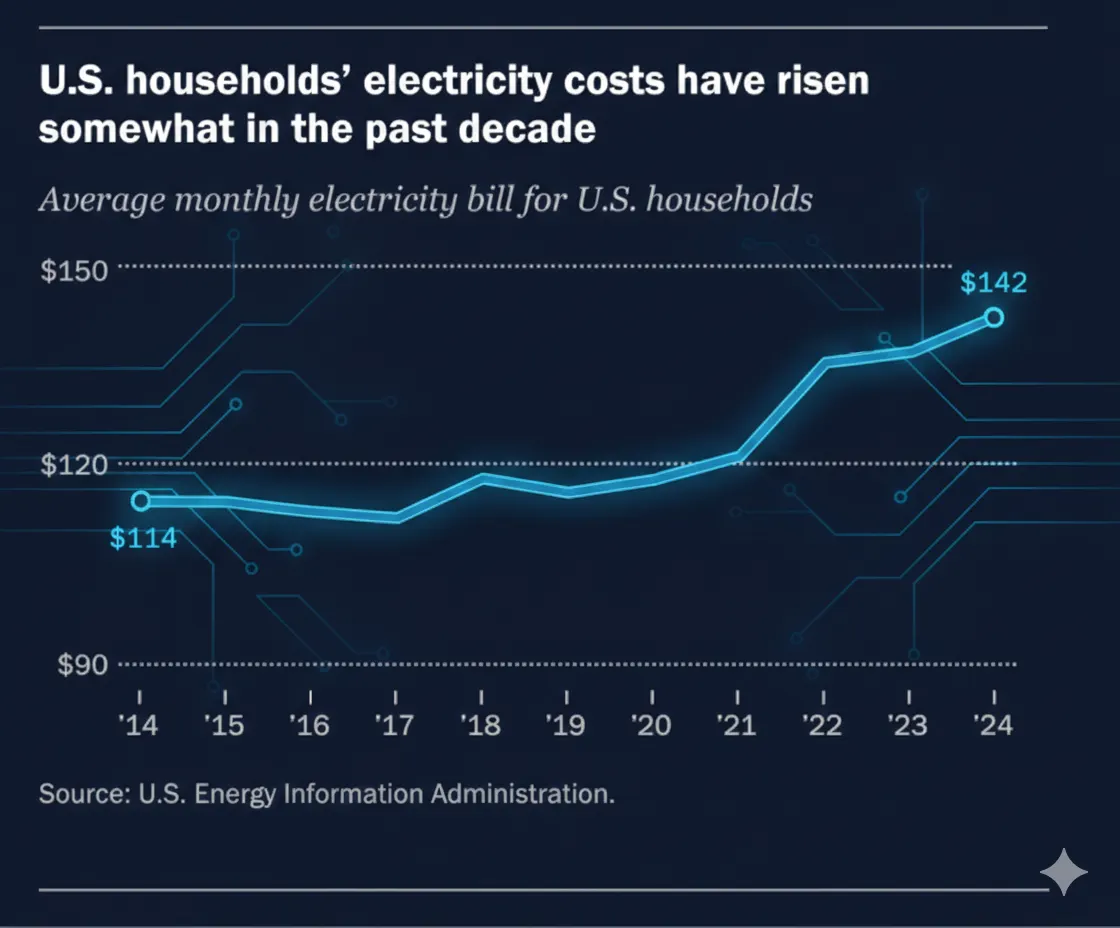
The economic reality of data center expansion is often felt most directly by the residential ratepayer. When a utility must build a billion-dollar substation to serve a new tech campus, the regulatory framework often allows those costs to be recovered from the entire customer base.
Looking Ahead: AI as Physical Infrastructure
As we move further into 2026, the industry must reckon with the fact that AI is not an invisible force. It is a physical, resource-intensive industry that requires a new social contract between tech operators, utilities, and the public.
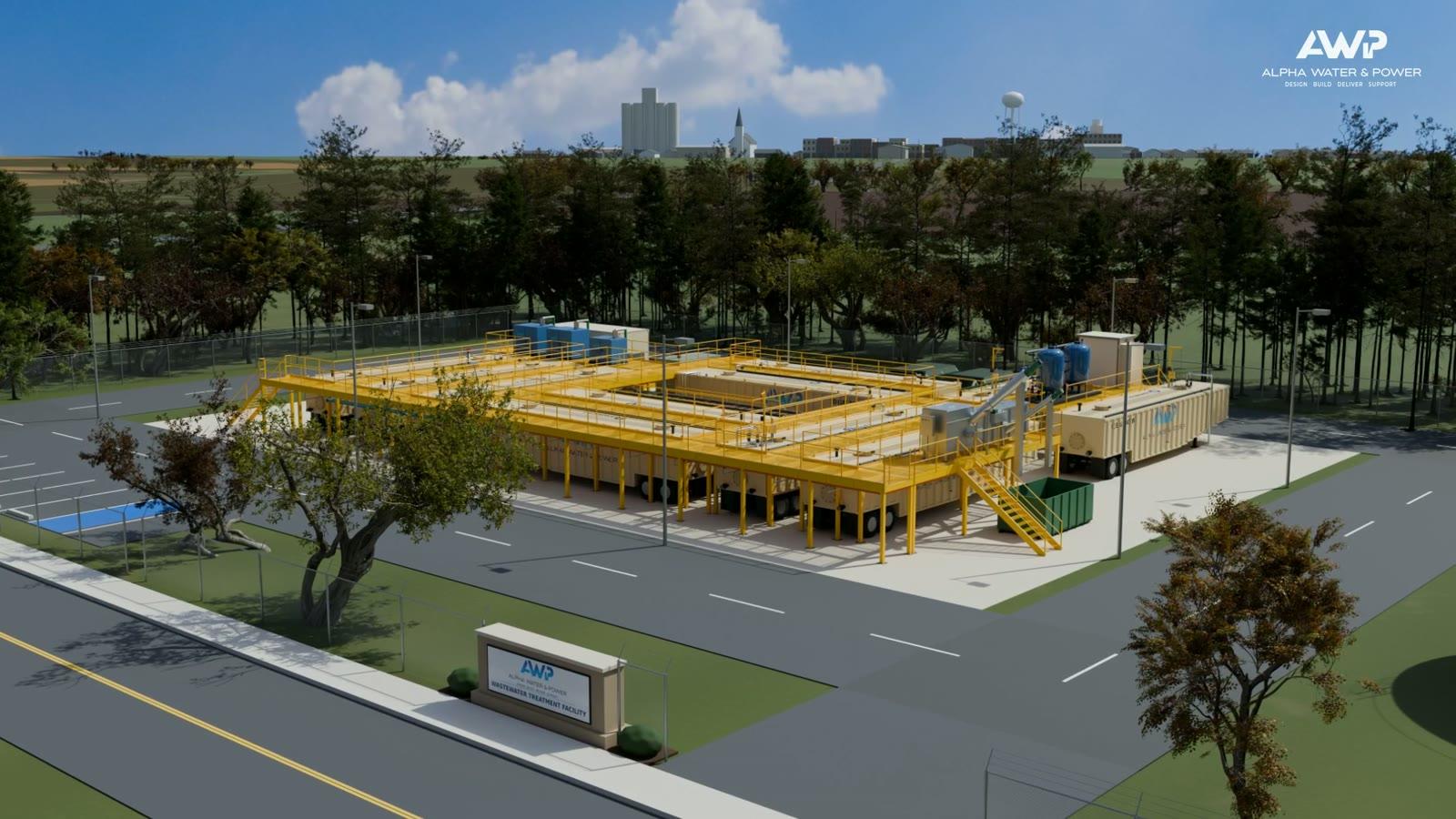
The solution lies in the integrated deployment of power and water technologies. By utilizing microgrids, advanced liquid cooling, and wastewater reclamation, data center operators can decouple their growth from the degradation of public resources. Alpha Water & Power remains at the forefront of this transition, engineering the systems that allow intelligence to scale without compromising the physical environment.
Technical Reference Library
The following academic and technical documents serve as the primary evidence base for this analysis:
- On-Site Power Strategies: Research Group on Sustainable Infrastructure (2026). Datacenter Microgrids: Cost–Emissions–Reliability Frontier Across the U.S.
- Energy Demand Modeling: Siddharth, A., et al. (2025). Energy, AI, and Power-System Constraints: Technical Report 2505.09598v6. arXiv.
- Socio-Technical Analysis: Edwards, H., Cooper, T., & Hogan, M. (2024). The Making of Critical Data Center Studies. University of California Press.
Ready to solve the energy-water challenge for your next deployment?
Contact the Strategic Team at Alpha Water & Power.